Best Apps to Learn Moroccan Arabic (Darija) in 2025
Let me be honest from the beginning, these best apps to learn Moroccan Arabic that I will show you below won’t replace real conversations. They help you prepare for them. Small lessons, clean audio, spaced repetition, and phrases you’ll actually say. Ten focused minutes can move you more than a big, stressful study plan.
Quick confession: I’m a student too. I’m learning Finnish on Duolingo as my warm-up before real classes. Right now I’m on a 65-day streak, Level 10, with 3,859 XP, and I’ve reached Section 2, Unit 2: “Talk about food.” (Screenshots below.) Small lessons, every day. No drama, just reps.
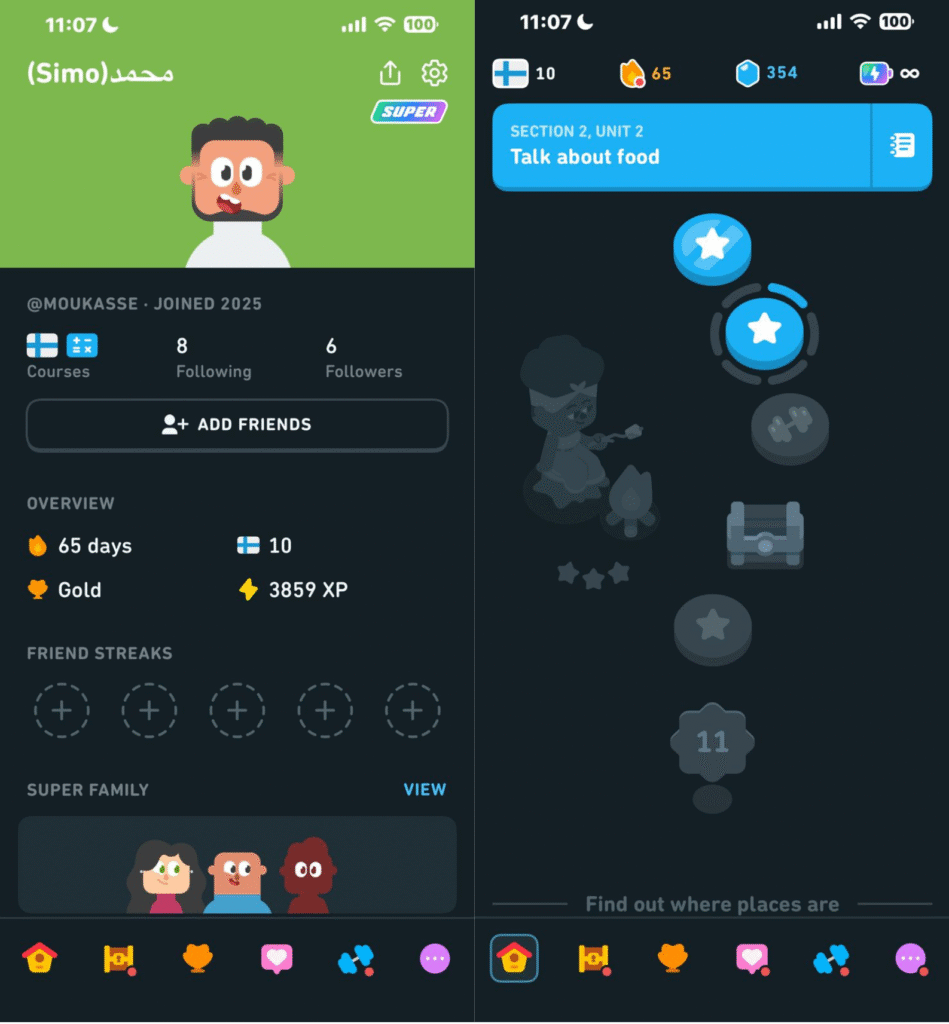
My plan is simple: finish the app basics, then enroll in an online Finnish school to build speaking fast. Apps to prepare, live lessons to activate. And that’s exactly how I want you to approach Moroccan Arabic(Darija): use the best apps to learn Moroccan Arabic for daily practice, then come practice with me inside Darija Learner Pro School when you’re ready to talk for real.
And yes… before you ask… Duolingo doesn’t offer Moroccan Arabic(Darija) right now. I will be the first one to know in the future insha Allah hhhh, that’s exactly why I did the legwork and tested what’s available, so you don’t waste time on tools that teach everything except how Moroccans actually speak at the bakery. The best apps to learn Moroccan Arabic below are accurate, audio-rich, and simple to use.
Alright, with that being said, let me show you the best apps to learn Moroccan Arabic (Darija), Bismillah.
Best Apps to Learn Moroccan Arabic (Darija): My 2025 Picks
1) uTalk – Moroccan Arabic (Darija)
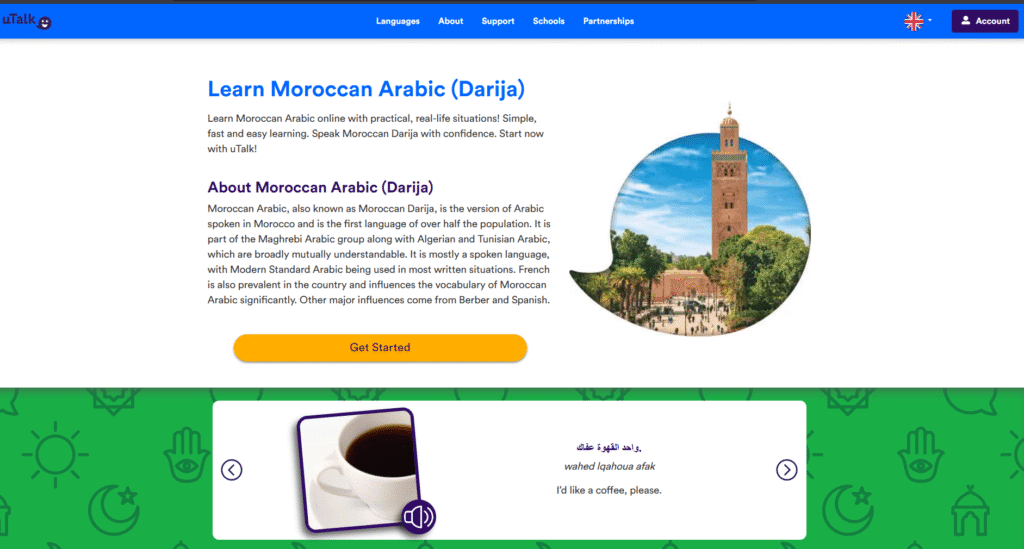
I tried uTalk like I ask my students to use it: ten quiet minutes, headphones on, repeat after the native voice, then record myself. It’s not a full “course,” but for speaking confidence, it works.
It’s a topic-based mini-lessons (greetings, food, directions) with native Moroccan audio. You listen, repeat, record, and test yourself with quick games. Great for “get it in your mouth” practice.
Now, here is what I like about it as a teacher:
- The voices sound Moroccan, not generic Arabic or Fusha.
- You can slow the audio and record-compare your pronunciation.
- The topics are practical; I can send a student “Food & drink” today and hear progress tomorrow.
- Works offline-perfect for the tram or when I am traveling to Ifrane(my favorite town) or coffee line.
Pros (what users-and I-appreciate):
- Clean native audio with both male/female voices.
- Bite-size, stress-free sessions; easy to keep a streak.
- Pronunciation practice feels natural—no grammar lecture, just say it right.
- Offline packs for travel or spotty Wi-Fi.
Cons (what reviews often mention, and I agree):
- It’s not a full course-little explicit grammar or conversation building.
- Spaced repetition is lighter than Anki/Memrise; review can feel random.
- The subscription can be pricey if you only need one or two topics—wait for discounts or buy specific packs.
I would differently recommend it for beginners and travelers who want usable phrases with good pronunciation-fast. If your goal this month is “order coffee without switching to French,” start here.
Now here is my study plan for you if you decide to go with utalk (do this for 10 minutes):
- Pick one topic (e.g., Food & drink).
- Shadow each phrase twice-loud voice, mirror the rhythm.
- Record yourself and compare.
- End with the quick quiz.
- Tomorrow, review + two new phrases.
After a week, go order your khobz(Bread) and Atay(Tea). You’ll be understood.
Try to pair it with a dictionary only when you get curious about a word’s root, and with real conversation once a week. and make sure you avoid these 9 Beginner Mistakes before you start.
At the end of the day, uTalk won’t teach you everything, but it will train your ears and get your mouth moving in real Moroccan. For me, that’s a win… and a strong first step before deeper study.
2) GoDarija – Structured Darija Lessons
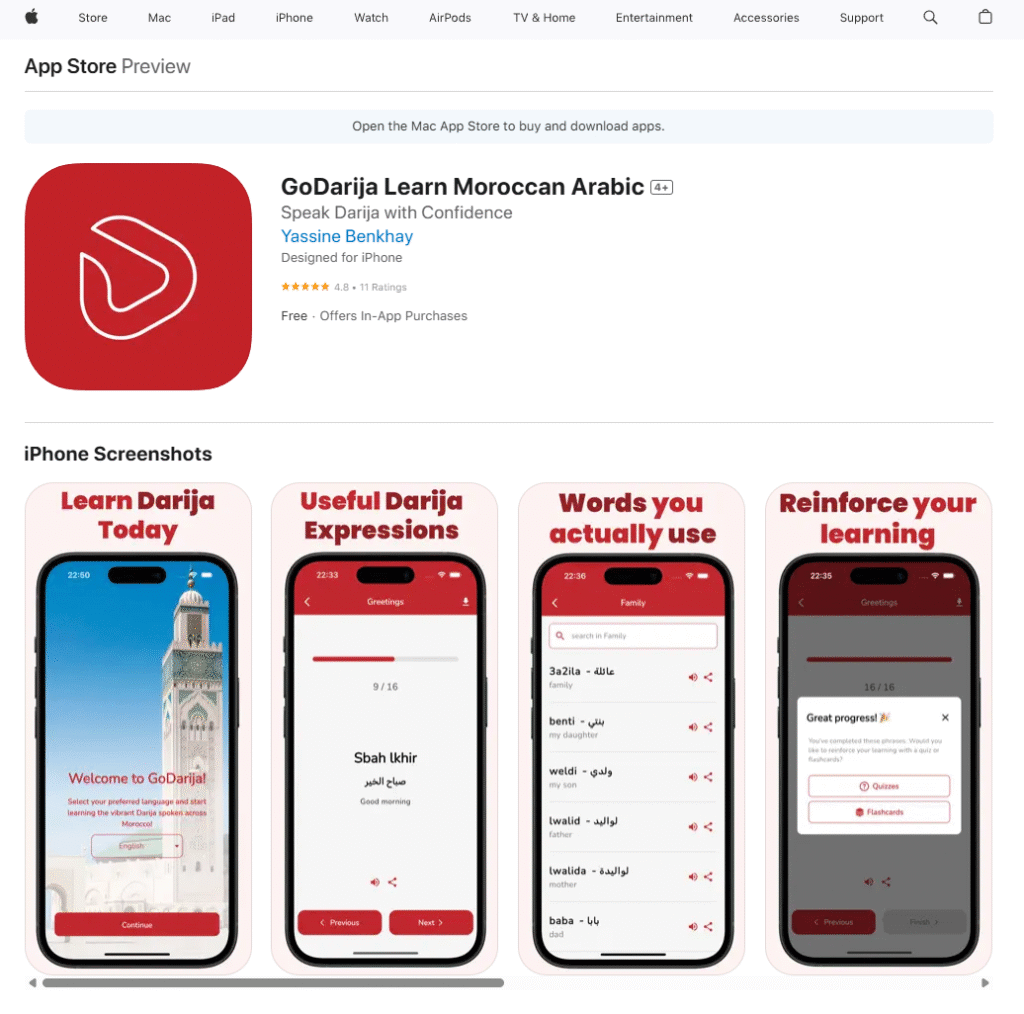
If uTalk is a good “phrase gym,” GoDarija feels more like a mini-class on your phone. I worked through the beginner path the same way I guide new students: listen → repeat → short quiz → tiny dialogue. Nothing out of the ordinary… just steady progress.
What the GoDarija offers is a clear sequence of Darija lessons with native audio, bite-size explanations, and quick checks. Units build on each other, so yesterday’s greetings appear again when you learn to ask for bread today. Simple, but helpful.
Here is what I appreciate about it as a teacher:
- The order makes sense. You meet phrases, then hear them again in short dialogues.
- Pronunciation is front-and-center. You’re nudged to say it out loud (good!).
- The app sticks to Moroccan usage, not generic Arabic. That keeps learners confident when they finally talk to a taxi driver.
Pros
- Step-by-step path-easy to open and continue where you left off.
- Native audio with everyday words you’ll actually use.
- Quick quizzes that highlight weak spots without overwhelming you.
- Works well for total beginners who want structure, not a huge menu.
Cons
- Less for upper-intermediate learners; after the basics, you’ll want real conversation.
- Grammar notes are light—fine for speed, but some learners may want more detail.
- Mobile-first experience; if you prefer desktop study, this won’t be your favorite.
I recommend it to anyone starting from zero who wants a guided route and complimenting it with Darija vlogs and short podcast on YouTube.
How I’d use it (7-minute loop):
- One new lesson (3–4 minutes).
- Repeat the audio and shadow each line once.
- Do the quiz, screenshot anything you miss.
- Add two words to your flashcards (Anki/Memrise).
- Next day, review and move one step forward.
This is optional but if you’re deciding your overall path, read my 3 Best Ways to learn Moroccan Arabic for Beginners. It’ll help you plug GoDarija into a weekly plan without burning out.
3) Morolingo – Darija (plus Amazigh) with Friendly, Short Lessons
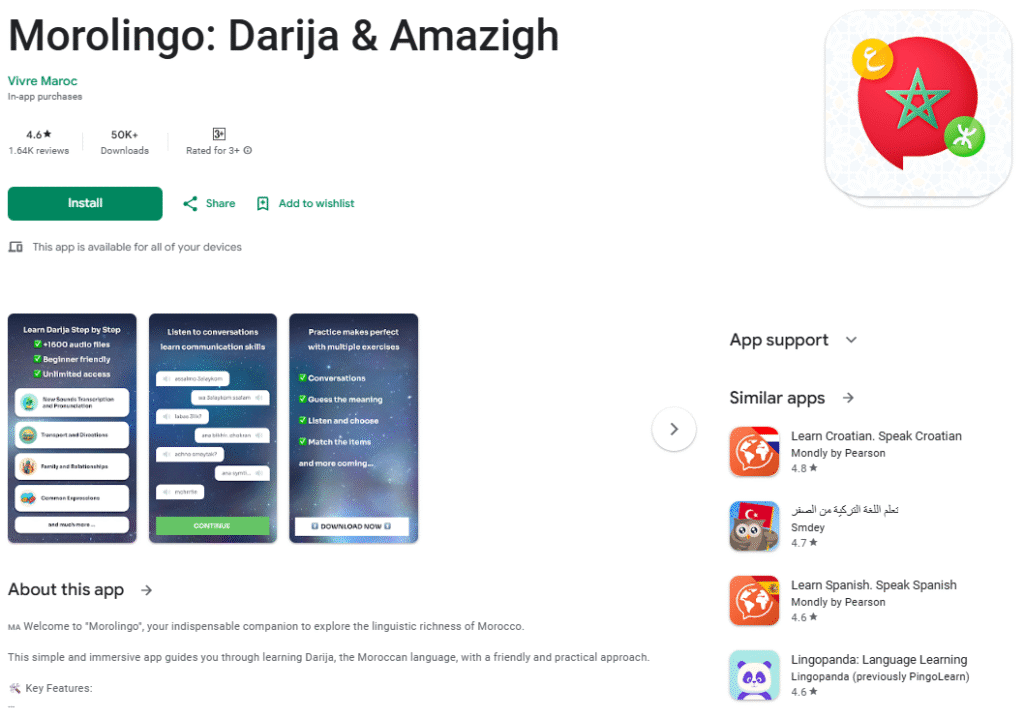
Morolingo feels like studying with a patient Moroccan cousin hhh: short clips, clear audio, and everyday phrases you’ll use the same week. I first mentioned it briefly in my roundup of Darija dictionaries & apps – if you want more info about it, do a little peek at that post after this section.
It offers compact Darija lessons arranged by theme (greetings, family, food), with native audio and quick checks. There’s also an Amazigh track, which many learners enjoy for cultural awareness as there are three ethnicities in my beloved country, Morocco.
Why I keep it on my phone
- It’s gentle. When a student is overwhelmed, Morolingo lets them get a win in 5 minutes.
- The audio is slow enough to shadow without feeling robotic.
- Phrases are useful right away – perfect for your first café order or small talk.
Pros
- Beginner-friendly pacing; you won’t drown in menus.
- Clear native audio and bite-size practice.
- Light quizzes that show what to review next.
- Bonus Amazigh path if you’re curious about regional language.
Cons
- Not ideal for intermediate learners – content thins out after the basics.
- Some translations can be a bit literal; I tweak a phrase here and there with students.
- Limited grammar explanations – good for speed, but you may want a separate reference.
I would recommend this app to absolute beginners who want low-friction Darija practice and anyone who needs a “quick win” app to keep momentum.
Now, here is my mini–study plan for you (8 minutes):
- Do one lesson (3–4 minutes).
- Shadow each line out loud once.
- Add two phrases to your flashcards.
- Record a 20-second voice note saying those phrases in a tiny dialogue (talk to yourself – yes, it works!).
The bottom line is that Morolingo is a calm, confidence builder. It won’t carry you to advanced conversations, but it’s excellent for the first 30–45 days – exactly when most learners need friendly structure and clear audio.
4) Bluebird Languages — Arabic (Moroccan): Hands-Free Listening
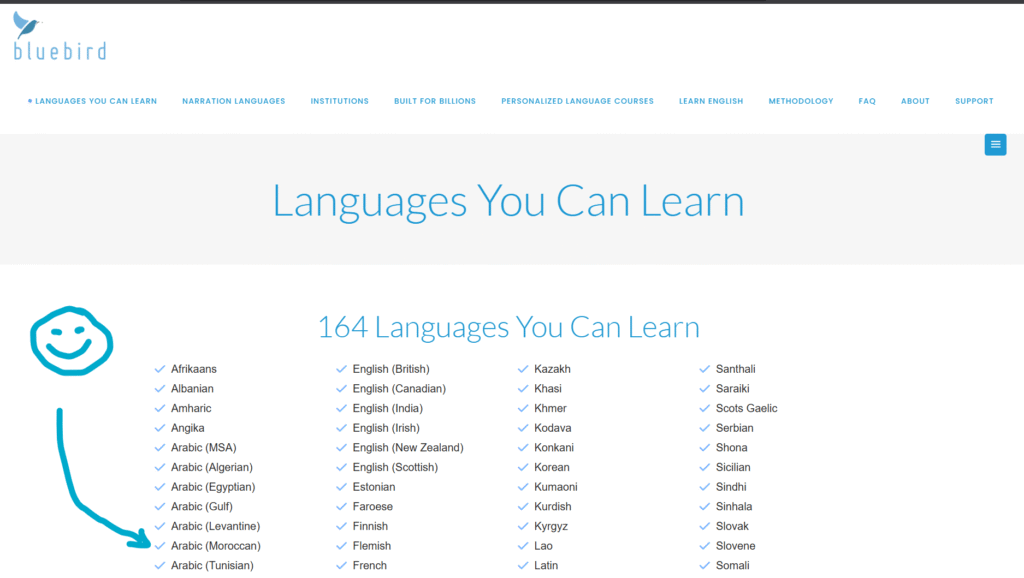
Bluebird is my commuter app. I tested the Moroccan track on morning walks: phone in pocket, earphones in, repeat after the speaker. No tapping, no menus—just listen → repeat. If you like learning while moving, this one fits.
It offers a big library of audio lessons labeled Arabic (Moroccan) as you can see in the screenshot above. You can set playback speed, download for offline, and follow along with simple prompts. It’s great for pronunciation, rhythm, and ear training.
What I like about it as a teacher is:
- It forces speaking out loud without screen distraction.
- Lots of repetition – perfect for automating common phrases.
- Adjustable speed helps students shadow naturally.
Pros
- Hands-free; ideal for walks, chores, commute.
- Downloadable lessons for offline practice.
- Solid pronunciation work – you’ll feel your mouth getting faster and cleaner.
Cons
- It’s audio-first: minimal visuals and light grammar notes.
- Content can feel broad; you’ll want a plan (see routine below).
- Not the best for learners who need quizzes and badges to stay motivated.
I think it is best for learners who want speaking practice without screen time – think daily walk or kitchen duty.
Now to my mini-study plan for you (12 minutes):
- Pick one short lesson.
- Shadow at 0.9× speed (first pass).
- Shadow again at 1.0×.
- Record a 30-second voice note summarizing 2–3 phrases you learned.
- Next day, review yesterday’s note, then add a new lesson.
If you want to level up fast and when your listening starts to click, map your next steps with the Full Beginner’s Guide 2025 (it shows how to combine apps, speaking, and review without burning out).
If you’re unsure of your current level, book a free 30-minute Darija level assessment call – I’ll listen to your speech and give you a clean plan for the next month.
I think Bluebird won’t teach everything on its own, but it’s excellent for ear training and pronunciation – the two skills most apps forget. Pair it with a structured app (like GoDarija) and you’ll hear the difference by next Friday.
5) “Darija – Moroccan Arabic” (Android) – Visual Flashcards & Quick Drills
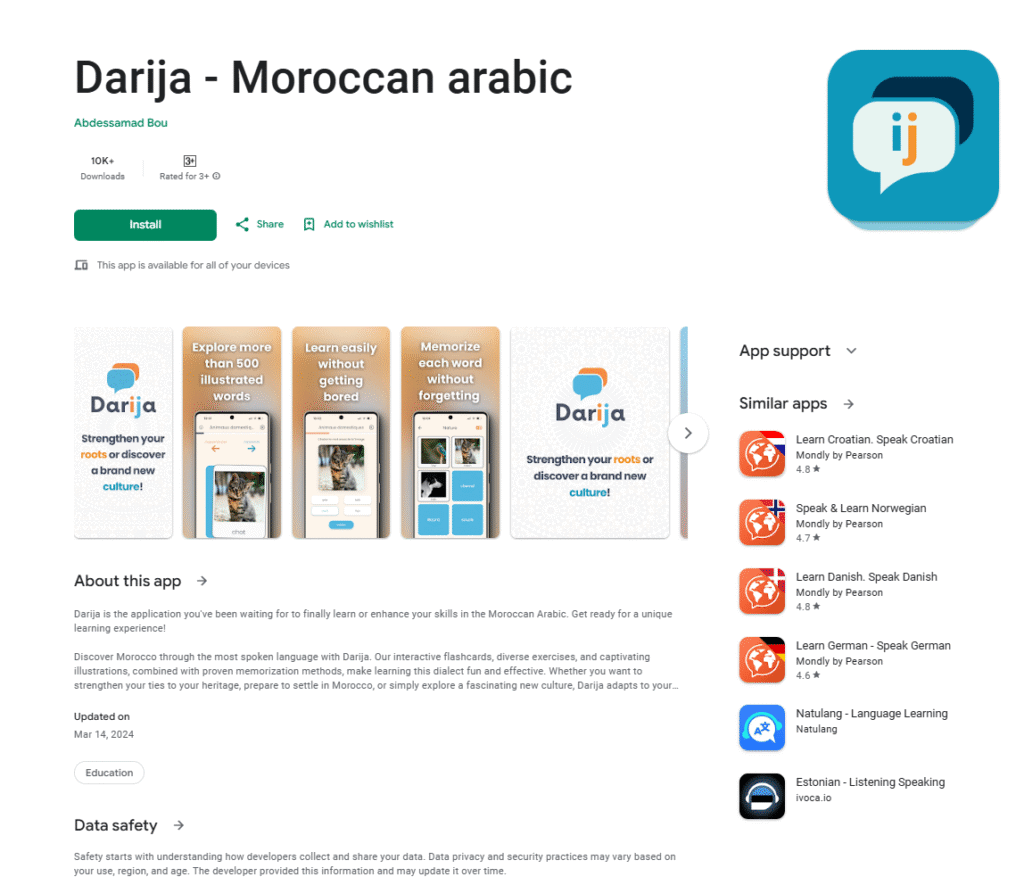
This Darija app is a flashcard-first app made by a Moroccan developer. I tested it the way most of you will: five-minute bursts between tasks. You’ll find illustrated cards, tap-to-reveal audio, and short drills to help words stick.
It offers over 500 picture-backed words & mini-phrases, grouped by themes (home, food, travel). The visuals make it easy to remember, and the pace is friendly for true beginners.
What I like about it as a Darija teacher:
- Pictures + audio = strong memory hooks, especially for concrete vocab.
- Sessions are short and focused; great for busy learners.
- Nice way to build a base list before moving into phrases or dialogues.
Pros
- Illustrated cards keep you engaged.
- Simple navigation – open, learn, done.
- Good starter vocab you’ll meet often in daily life.
Cons
- It’s mainly single-word practice; you’ll need another app for full phrases.
- No deep grammar or conversation features.
- Android-only (at the time of testing).
I would suggest this app for total beginners who want a gentle vocab ramp before tackling phrases.
Alright, here is my mini-study plan for you (6 minutes):
- Learn 6 new words in one theme.
- Say each word out loud twice with the audio.
- Add 2–3 words to your flashcards for spaced repetition.
- Tomorrow, review those and add six more.
It would ideal if you can compliment this Darija app with my free Darija Audio eBook for mini dialogues that use this vocab. Hearing your new words inside real phrases is where the fun begins.
6) Memrise — Community Moroccan Courses & Phrasebook
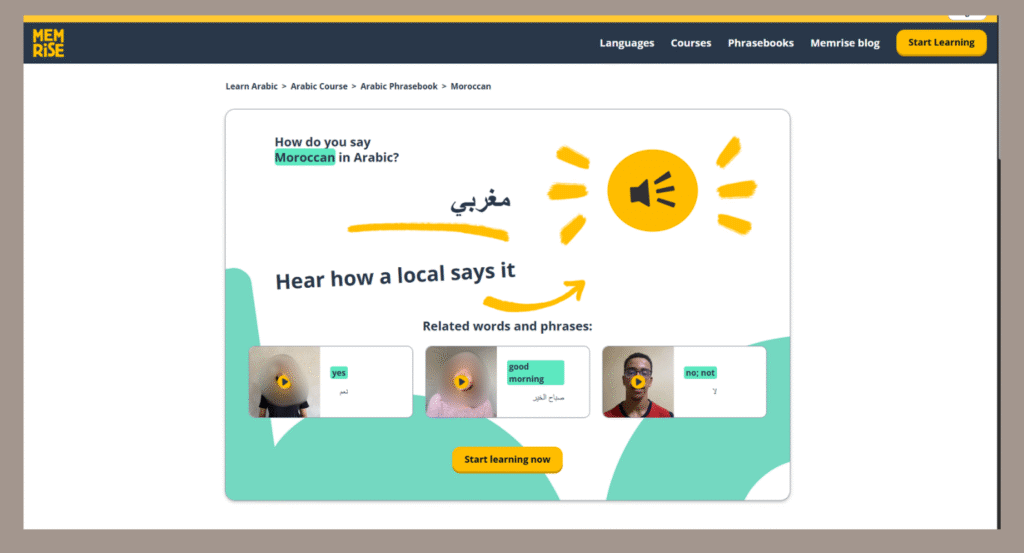
Memrise has a Moroccan Arabic phrasebook and several community-made Darija courses. I recommend it to my students and tell them to treat it like a spaced-repetition lab: quick clips from locals, then fast reviews that bring words back before you forget them.
If offers short video or audio snippets of native speakers plus built-in SRS review. You’ll find survival phrases (“good morning,” “how are you?”) and beginner sets made by teachers or enthusiasts.
It works really well with:
- The SRS engine keeps reviews on schedule – low effort, high return.
- The native video snippets help your ear adjust to real Moroccan speed and tone.
- Great as a daily review companion to whichever main app you choose.
Watch-outs
- Because some courses are community-created, quality can vary. Pick one with lots of items and recent updates.
- You may see a mix of transcription styles (Latin script vs. Arabic script). Choose the format you’ll actually use.
- It’s not a full path; think of it as review + extra input, not your only teacher.
This app is best for learners who like gamified review and seeing real people say the phrase.
Here is my mini-study plan for you (10 minutes):
- Do a new items round (no more than 10).
- Review until your queue is clear.
- Shadow two video clips and mimic the rhythm.
- Once a week, export your trickiest words to your main flashcard deck.
When you’re ready to speak: book your free 30-minute Darija level assessment call. We’ll check pronunciation, trim your word list, and build a one-month plan so your Memrise reviews line up with real conversation.
7) Moroccan Phrasebook (iOS) — Straight-to-the-Point Travel Phrases
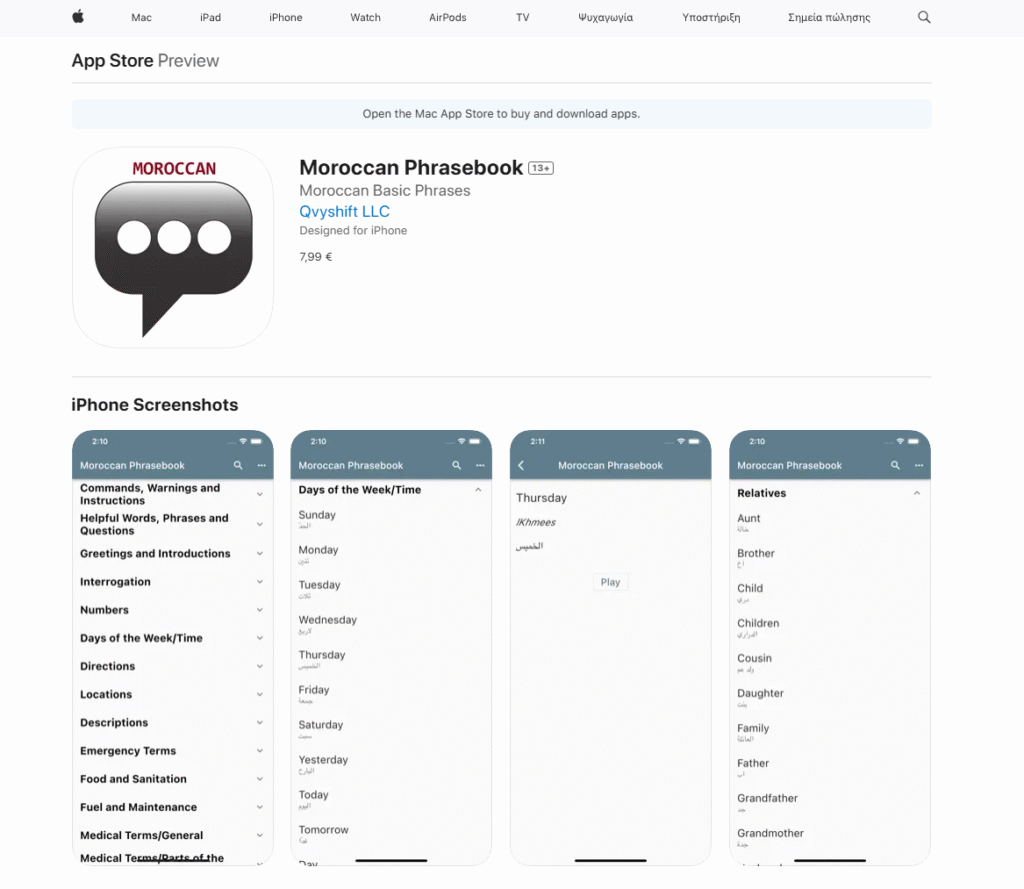
This one is the classic phrasebook trainer: open the app, pick a category (greetings, directions, numbers, food), tap to hear the Darija, then repeat. I tested it like a traveler – standing in the kitchen rehearsing how to ask for khobz and directions. It’s simple and it works for survival speech.
I see that it offers a tidy list of everyday categories with playable audio for each item. No confetti, no quests – just “hear → repeat.” Great when you need fast phrases for a trip or your first week in Morocco.
Why I recommend it (with the right expectations)
- It’s friction-free. Two taps and you’re listening to real phrases.
- The audio button on each entry makes shadowing easy.
- Offline-friendly and easy to scan when you’re on the move.
Pros
- Practical categories (greetings, time, family, directions, emergencies).
- Tap-to-hear audio—perfect for quick reviews.
- One-time purchase style, so no subscription stress.
Cons
- Not a course: no spaced repetition, limited practice activities.
- Interface feels a bit old-school, but it gets the job done.
- Works best for travel/basic interactions, not long conversations.
I think this last one is best suited for travelers and absolute beginners who want a pocket phrase coach to sound polite and understood from day one.
How I’d use it (5-minute “bus stop” routine):
- Open Greetings or Food.
- Tap each phrase, shadow it twice.
- Star your top 5 phrases for the day.
- Before bed, replay the Star list once.
Once you’ve got these phrases in your ear, you can level-up with video input by adding real-life listening. My guide “6 Best YouTube Channels to Start for Free” shows channels with clear, friendly Darija so you can hear how people actually say the same phrases in conversation. It’s a perfect combo: app for quick recall, YouTube for real voices and context.
How to Choose a Moroccan Arabic Learning App?
If an app teaches great MSA but weak Darija… skip. Use this quick checklist before you commit, also, some other things you should keep in mind are:
- Dialect accuracy: it should say ktab, sbaḥ l-khir, labas? – not textbook MSA.
- Native audio + slow mode: clean voices you can shadow; bonus if you can record & compare.
- Spaced repetition (SRS): automatic reviews so words return before you forget.
- Real phrases & mini-dialogues: not just single words.
- Offline mode: tram, café, airplane – no problem.
- Script options: Arabic script and/or easy transliteration you’ll actually use.
- Clear path + small wins: you always know what to do next in 10 minutes.
- Honest pricing: buy what you need; no surprises.
If you’re learning for family life (meeting in-laws, weddings, daily chats), focus on polite greetings, family terms, food, directions, and small talk first. Then layer listening and pronunciation.
What is the best Darija App for Vocab & Review (Spaced Repetition) in my opinion?
I would pick Anki and Memrise (Moroccan courses & phrasebook).
Why you may ask? because both handle the review piece most apps forget. New items come back automatically, so vocab sticks with little stress.
Add 5–10 items/day and clear your review queue; that’s it.
Here is a little tip from me, when a word keeps slipping, shadow a native video clip three times and try to mimic the rhythm. Save your “sticky” words to a small deck for extra practice.
What is the best Moroccan Arabic app for phrases & travel?
I would pick uTalk – Moroccan Arabic (Darija)
Why? straight to useful phrases with native audio and a simple record-and-compare tool. Two nights of “Food & Drink” and you’ll order like a mensch.
I recommend you star your Top 10 travel phrases and drill them daily for one week; test them at the bakery. A smile is the best progress bar.
What is the best App to learn Moroccan Arabic pronunciation?
I would pick Bluebird – Arabic (Moroccan).
If you ask me why? I would tell you that it is a hands-free shadowing. Walk, cook, repeat after the speaker, and feel your mouth get quicker and cleaner.
Keep in mind that you should do one short lesson at 0.9× speed, then again at 1.0×. Record a 30-second recap voice note; tomorrow, listen to your note before a new lesson.
What is the best free app to learn Darija for starters?
It would be Morolingo (free basics)
The reason why is because it has gentle lessons with clear audio and practical phrases. Perfect for your first 30–45 days.
Remember that you should do just one lesson, shadow each line once, then move two phrases into your review app (Memrise/Anki).
Are you learning Darija to connect with your fiancé’s or spouse’s family? After you nail greetings and family terms, read “12 Signs a Moroccan Man Loves You (Culture-Smart)” – it’ll help you understand the unspoken culture signals while your Darija grows.
Grab my free Darija Audio eBook to shadow mini-dialogues this week. If you’d like a friendly check-in, book a free 30-minute Darija level assessment – I’ll listen, place your level, and give you a simple plan. And when you’re ready for real conversation practice, come join us in Darija Learner Pro School. We sip tea, laugh, and make your Darija useful, inshaAllah.
Q: Are apps enough to become fluent in Darija?
A: Apps build vocab and confidence, but fluency comes from real conversation. Use an app for daily reps, then practice with native speakers or a tutor at least weekly. That combo – input + speaking… is what makes your Darija stick.
Q: What’s the best free Darija app for beginners?
A: Start with a flashcard app and a Darija phrasebook app. Focus on the top 200 words and survival phrases. Add daily listening (podcasts/YouTube) and shadowing. Free tools are enough for a strong start if you’re consistent.
Q: How many minutes per day should I use an app?
A: Aim for 10–20 focused minutes, every day. Short, consistent sessions beat one long weekend cram. Do new cards first, then review, then 5 minutes of out-loud shadowing.
Q: Can I learn Moroccan Arabic from MSA or other Arabic apps?
A: MSA apps help with script and some vocab, but Darija is different. Use Darija-specific content for daily speech. MSA is a bonus – not a shortcut… for Moroccan conversations.